
Fusing Code and Concrete — Decentralized Modular Platform
Legolith transforms physical construction into an infinite software ecosystem. Combining Nested Blocks Tree (NBT) geometry, magnetic adjacency compatibility, and decentralized node manufacturing for instant modular delivery.
Standardized 5.6m × 2.8m spatial pods · Open interoperability specification
Validated Across Modular & Prefabrication Pioneers
Spatial Assembly Architecture
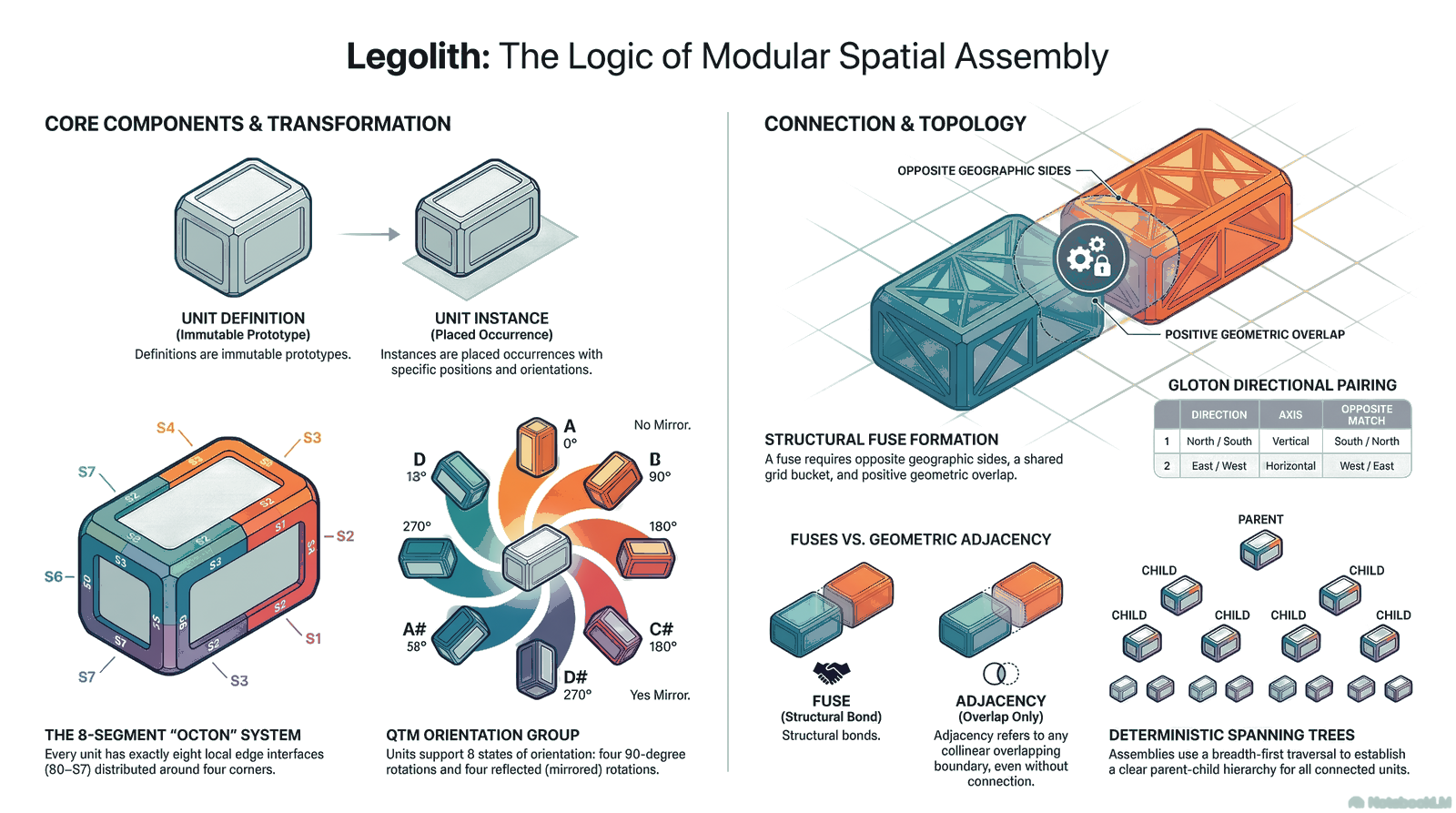
The foundational protocols transforming physical building components into software-composable, interlocking modular complexes.
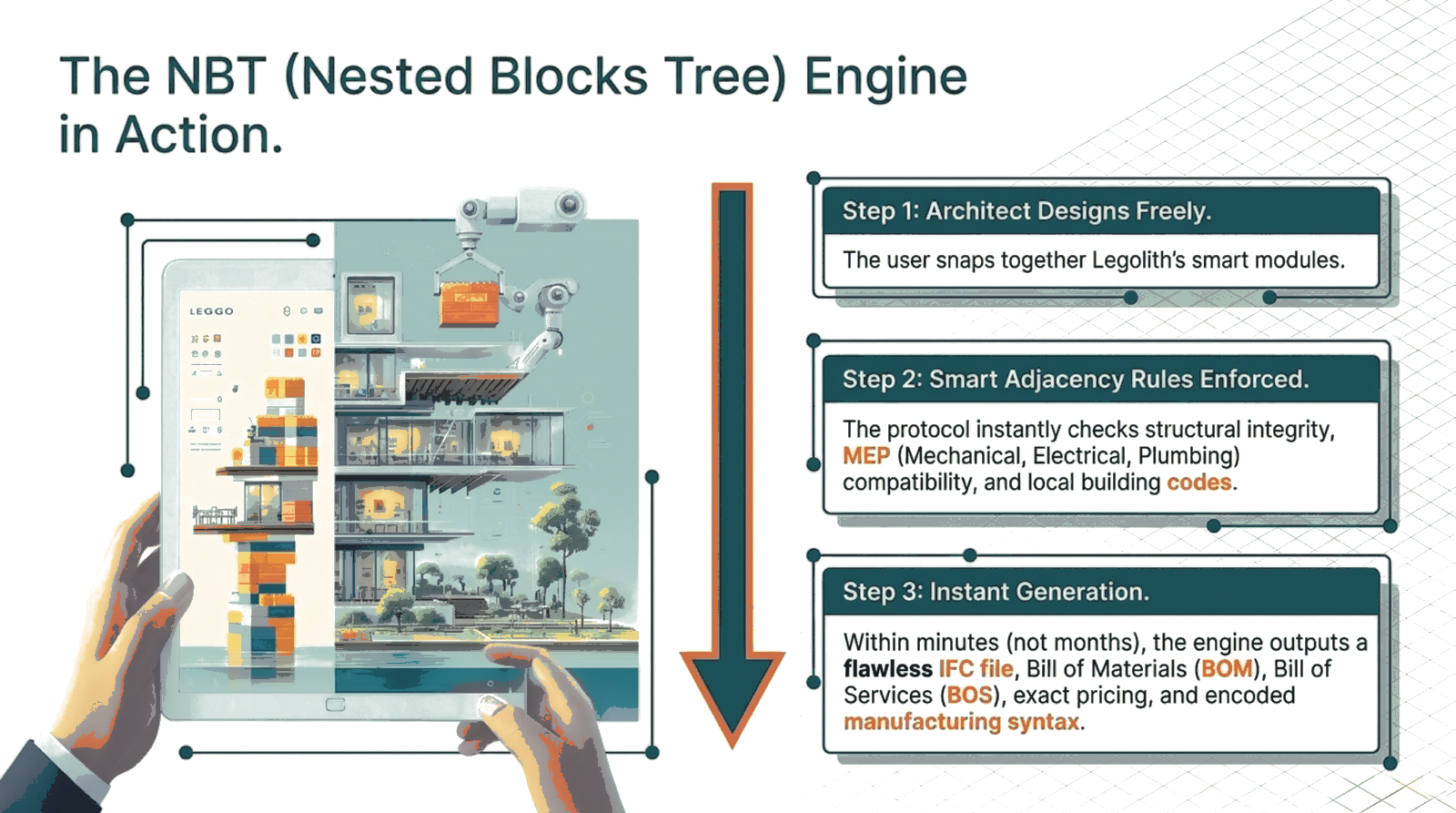
Nested Blocks Tree (NBT) Engine
Hierarchical parametric tree structure encoding every sub-pod, envelope layer, structural connection, and mechanical routing into a computable node graph.
Magnetic Adjacency Mechanism
Physical and digital self-aligning docking interfaces. Automatic tolerance absorption and multi-utility structural engagement when pods touch.
Parametric Multi-Unit Clustering
Algorithmic layout generation supporting brutalist cantilevers, stepped Habitat 67 sky terraces, and dense urban perimeter typologies.
Logic-Based Compatibility Engine
Evaluates adjacency rulesets via Binary Decision Diagrams (ROBDDs) before fabrication — mathematically verifying zero field clashes.
Decentralized Node Dispatch
Distributes pod fabrication across an agile network of independent offsite manufacturing facilities, optimized for logistics and crane radius.
Living Digital Asset Moat
Every installed module maintains a permanent digital twin tracking maintenance, structural sensor telemetry, and circular lifecycle reuse.
Magnetic Adjacency System Mechanism
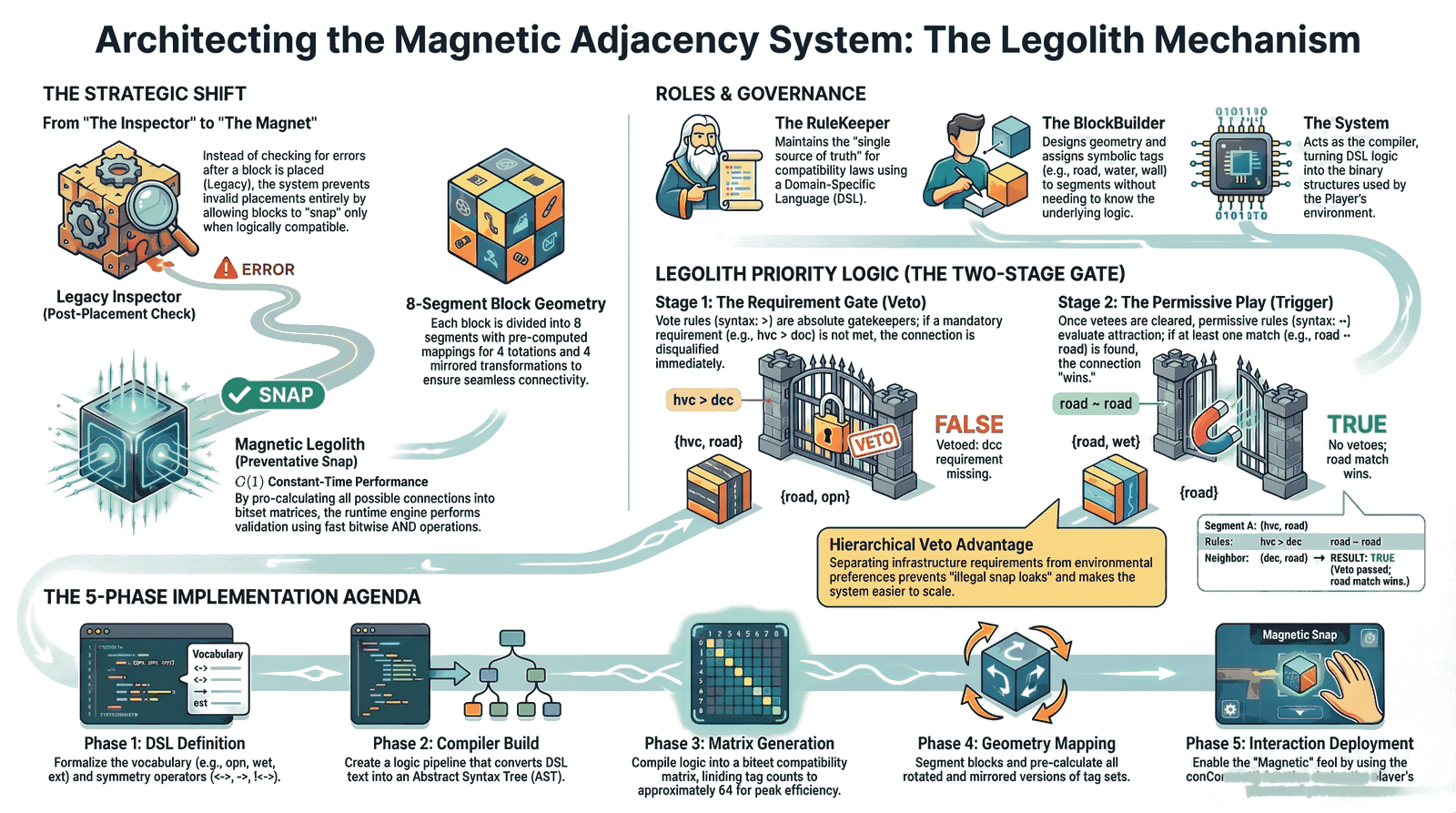
Self-aligning spatial rulesets convert architectural intent into physical docking precision. Configure boundary snap zones, structural load paths, and utility interconnects without writing code.
Proximity Detection
Modular pod enters 1.5m spatial proximity envelope during crane hoisting. Sensors acquire corner twist-lock datum coordinates.
ROBDD Compatibility Check
Instant boolean evaluation of face adjacency — checks shear wall alignment, plumbing stack continuity, and seismic pin engagement.
Self-Centering Docking
Mechanical guide-cones and magnetic guides pull the module into nominal position with ±1.5mm absolute millimeter tolerance.
Automated Utility Latch
Hydronic supply, drainage sleeve, power busway, and structural tension ties engage simultaneously and self-seal.
[21:42:01] PROXIMITY: Habitat Pod #14 entered ±1.5m alignment envelope
[21:42:01] ROBDD CHECK: Face-B to Face-A structural adjacency (VALIDATED: 0 Clashes)
[21:42:02] MAGNETIC SNAP: Guide-cones engaged · auto-centering to ±0.8mm offset
[21:42:02] LOCKED: Tension rods engaged · Vertical hydronic risers coupled and sealed
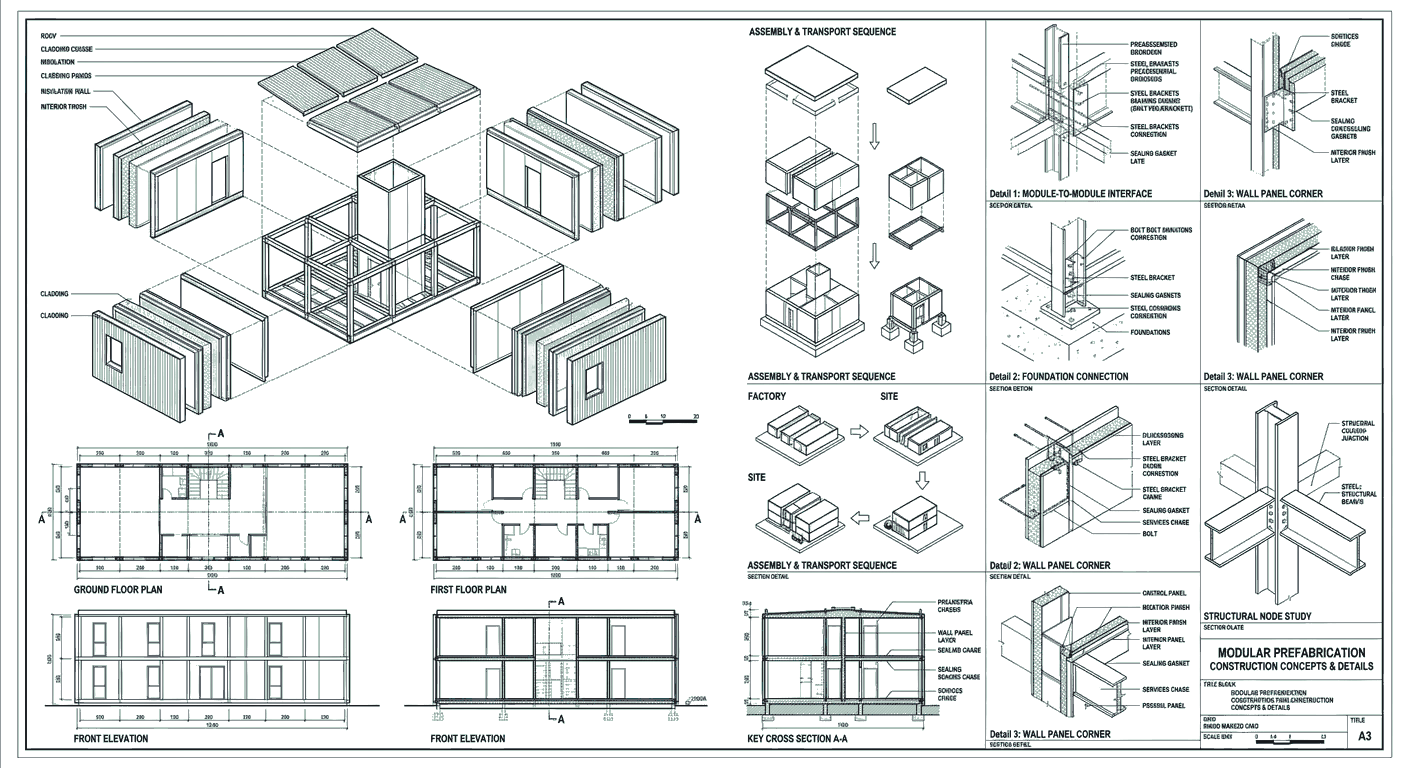
Prefabricated Assembly & Transport Sequence
Dynamic crane-hook dispatch and offsite convoy synchronization. Real-time factory-to-foundation logistics eliminating jobsite staging congestion.
Factory-to-Foundation JIT Delivery
Modular pods arrive directly on flatbed transports in exact erection sequence. The tower crane picks directly from the trailer to the structural foundation.
Dual-Crane Slewing & Collision Gating
Algorithmic coordination between the 32m primary tower crane and auxiliary tracked crawler crane prevents boom overlap and minimizes slewing duration.
Spreader Rigging & Hook Telemetry
Automatic balance sensing across 4-sling spreader beams guarantees level module hoisting without dynamic sway or tilt.
Foundation Piloti Seating Verification
Digital optical sensors verify datum point alignment on foundation pilotis before load transfer and hook release.
Weather & Wind Gust Auto-Hold
Anemometer integration pauses heavy panel hoists during high shear gusts and automatically recalculates crane pick schedules.
Structural Interlock Sign-Off
Instant digital sign-off of shear keys and tension rods enables simultaneous subsequent tier hoisting.
Enabling a Decentralized Construction Ecosystem
Legolith orchestrates the entire offsite construction lifecycle across distributed physical and digital participants.
Modular Offsite Factories
Decentralized node dispatch- Automated Nested Blocks Tree (NBT) bill of materials
- Direct CNC cutting and robotic precast formwork feed
- Real-time factory floor inventory leveling
General Contractors & Developers
Rapid crane-hook placement- Predictable crane cycle times per pod
- Reduced site logistics footprint in dense urban cores
- Compressed construction loan carrying costs
Architects & Structural Engineers
Composable spatial protocols- Habitat 67 cantilevered stepped hill typologies
- Automated daylight and ribbon fenestration calculations
- Pre-engineered structural connection libraries
Logistics & Rigging Crews
Self-centering magnetic guide- Standardized twist-lock container lifting lugs
- Real-time transport envelope clearance verification
- Automated spreader beam release sequencing
MEP & Systems Fabricators
Modular utility cartridges- Vertical hydronic riser self-docking sleeves
- Plug-and-play low-voltage control harness
- Pre-tested acoustic isolation baffles
Real Estate Asset Owners
Cradle-to-cradle lifecycle- Demountable pods for building reconfiguration
- Structural sensor health monitoring over 50+ years
- Higher residual building asset valuation
The Living Digital Asset Registry
Real-time telemetry, structural health verification, and circular component traceability across the lifecycle of every installed pod.
Real-Time Assembly Telemetry
Track module crane pick coordinates, hook descent velocities, and final seating tolerances in live 3D space.
ROBDD Rule Validation Logs
Audit trail of every mathematical compatibility check, code compliance rule, and structural tie sign-off.
Living Component Digital Twin
Full BOM passport for every pod — concrete batch records, sensor calibration, glazing U-values, and MEP schematics.
Dynamic Spool & Crane Sequencing
Real-time dispatch synchronization between offsite factories and jobsite tower crane availability.
Permitting & Code Compliance Exports
Instant IFC and OpenBIM submittals with automated IBC and Eurocode compliance stamps for rapid regulatory approval.
Multi-Site Assembly Portfolio
Enterprise dashboard overseeing simultaneous modular developments across multiple urban sites and offsite factories.
Why Legolith?
Reconstructing the $15 Trillion global building industry through software-driven prefabrication.
The Core Paradox of Construction
Demand for housing and infrastructure is exponential, but construction productivity has been flat for 50 years. Legolith solves this by turning bespoke jobsite crafts into software-compiled modular assembly.
Heavy Assets to Infinite Scale
Unlike capital-heavy modular startups that failed with giant centralized factories, Legolith operates as an asset-light orchestration layer across distributed fabrication nodes worldwide.
Nested Blocks Tree (NBT) Logic
Encapsulates complex physical engineering into composable hierarchy nodes, allowing customization without sacrificing industrial standardization.
Habitat 67 Cantilever Form
Architectural freedom meets modular efficiency. Build stepped sky terraces, multi-aspect cantilevers, and green sky gardens using standardized pods.
Magnetic Adjacency Mechanism
Precision docking eliminates the primary failure mode of modular construction: field tolerance stack-up and mechanical misalignment.
Decentralized Node Dispatch
Route pod fabrication to local fabricators within 100 miles of the site, minimizing transportation costs and carbon footprint.
ROBDD Logic Compiler
Compiles complex zoning, structural, and MEP adjacency rules into reduced boolean diagrams evaluated in microseconds.
Living Digital Twin Moat
Generates permanent operational records for predictive maintenance and cradle-to-cradle circular material recovery.
Automated Spreader Hoist Sequencing
Optimizes dual-crane slewing paths and hook releases for minimum idle cycle times.
Open Protocol Interoperability
Exports native IFC, STEP, and OpenBIM schemas compatible with all global CAD/CAM tools.
Frequently Asked Questions
Everything you need to know about the Legolith Master Protocol, NBT spatial engine, and decentralized fabrication.
Legolith is the decentralized operating system and open spatial assembly protocol for modular construction. It enables architects, structural engineers, and offsite factories to compose buildings as software algorithms that snap together physically with zero-tolerance precision.
The NBT engine is Legolith's core computational model. It structures physical building modules as a hierarchical parametric tree, evaluating complex spatial adjacencies through Reduced Ordered Binary Decision Diagrams (ROBDDs) to mathematically guarantee zero field clashes before manufacturing starts.
When crane-hoisted modules reach within 1.5m of their destination, mechanical docking cones and magnetic guides engage to pull the pod into nominal position with ±1.5mm absolute accuracy, auto-coupling electrical busways and hydronic risers.
Unlike traditional rectangular volumetric boxes that stack like simple bricks, Legolith modules feature multi-directional shear keys, tensile tie-rods, and corner castings that permit massive structural cantilevers, stepped garden sky-terraces, and brutalist multi-aspect ribbon glazing.
No. Learning from the failures of first-generation modular companies, Legolith operates as an asset-light software protocol orchestrating a decentralized network of certified regional fabricators located close to project jobsites.
Legolith provides bidirectional synchronization with OpenBIM standards, IFC 4.3, STEP geometry, Autodesk Revit, and universal CAD/CAM toolpaths for automated CNC cutting and robotic assembly.
Every Legolith pod retains an immutable digital passport logging its manufacturing telemetry, embedded sensor health, and structural load history — transforming depreciating real estate into reusable, tradeable physical-digital assets.
Explore the Master Protocol documentation, download the parametric NBT definition files, or connect your regional fabrication facility to the Legolith Decentralized Node Guild.
Ready to Fuse Code & Concrete?
Join the decentralized modular construction movement. Access the Legolith Master Protocol, download NBT parametric node schemas, or connect your fabrication facility.